Source breathable anti slip sports socks for Football, Soccer, Training
Find 30 listings of breathable anti slip sports socks featuring moisture-wicking, antibacterial, and eco-friendly options. Buyers can compare styles including crew, ankle, and knee-high designs with non-slip silicone grips for various athletic activities.
Key considerations
Products List



Comprehensive Sourcing Guide
Strategic Sourcing Guide for Breathable Anti-Slip Sports Socks
The global demand for performance-oriented hosiery has surged, with breathable anti-slip sports socks emerging as a critical component for athletes and fitness enthusiasts. For B2B procurement professionals, sourcing these items requires a nuanced understanding of material science, functional design, and supply chain logistics. The market offers a diverse array of options ranging from knee-high compression styles to ankle-length training socks. This guide provides a comprehensive framework for evaluating suppliers, verifying technical specifications, and ensuring product quality without relying on unverified claims. Buyers must navigate a landscape where "breathable" and "anti-slip" are common marketing terms that require rigorous validation against actual product attributes and manufacturing standards.
Technical Specifications and Material Composition
The foundation of a high-performance sports sock lies in its material composition and structural design. In the current market, cotton and polyester are the dominant materials observed, each offering distinct advantages for athletic applications. Cotton is frequently cited for its natural softness and moisture-wicking capabilities, making it suitable for general training and casual sports use. Conversely, polyester is often engineered for superior durability and rapid drying times, which is essential for high-intensity activities like running or soccer where sweat management is paramount.
A critical technical specification for anti-slip functionality is the grip material. High-confidence data indicates the use of non-toxic silicone as the primary grip agent. This material is strategically applied to the sole or cuff areas to prevent slippage within footwear or on playing surfaces. The application of silicone must be precise; uneven distribution can lead to discomfort or reduced efficacy. Furthermore, the thickness of the sock is a variable specification that ranges from thin to normal. Thin variants are typically designed for summer use or sports requiring a low-profile fit, such as soccer or basketball, where tactile feedback is necessary. Normal thickness variants often provide additional cushioning, which is beneficial for running or training sessions involving high impact.
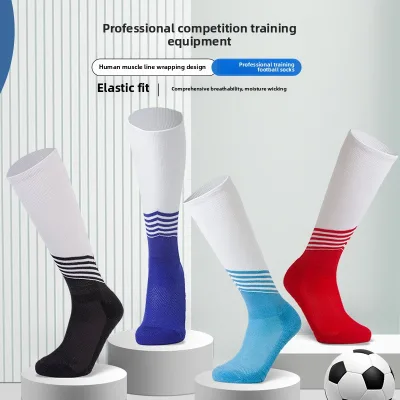
The length of the sock is another defining characteristic. The market features knee-high, crew, and ankle styles. Knee-high socks, often described as striped, are popular in soccer and football for their ability to protect the shin and provide a secure fit under shin guards. Crew length socks offer a versatile middle ground, while ankle socks are preferred for running or activities where maximum freedom of movement is required. The fit is generally described as stretchy with a non-slip cuff, ensuring the sock remains in place during dynamic movements. Buyers should verify that the elasticity is high, as this directly correlates with the sock's ability to maintain compression and support without restricting blood flow.
Functional Attributes and Performance Features
Beyond basic material and length, the functional attributes of sports socks determine their suitability for specific athletic environments. The primary functions observed include moisture-wicking, breathability, and sweat absorption. These features work in tandem to regulate foot temperature and prevent blisters. Breathability is often achieved through specific fabric weaves or the inclusion of mesh panels, allowing air circulation to cool the foot. Moisture-wicking properties ensure that sweat is drawn away from the skin to the outer layer of the fabric, where it can evaporate more quickly.
Anti-slip functionality is a dual-purpose feature. In addition to the silicone grips mentioned earlier, some products incorporate anti-foul and anti-bacterial treatments. These treatments are designed to inhibit the growth of bacteria and fungi, which thrive in the warm, moist environment of athletic footwear. This is particularly important for socks used in team sports like football, soccer, and basketball, where shared equipment and high perspiration levels are common. The presence of an anti-bacterial feature is often linked to the fabric's ability to remain odor-resistant over extended wear periods.
Cushioning is another key performance attribute. While not explicitly quantified in all listings, the presence of cushioning is implied in the "normal" thickness category and is essential for impact absorption. This is especially relevant for running and training activities. The design of the sock, including patterns such as plain or colored stripes, also plays a role in user preference and team identification. Customization options allow buyers to tailor these designs to specific brand identities or team colors, a feature that is widely available in the current supply chain.
Compliance, Certifications, and Safety Standards
When sourcing sports socks, verifying compliance and safety standards is paramount, particularly for products intended for commercial resale or team use. While specific certifications like BSCI or GOTS are mentioned in background contexts, buyers should not assume their presence without direct verification from the supplier. Instead, the focus should be on verifying the safety of the materials used, particularly the grip agents. The supply data confirms the use of non-toxic silicone, which is a positive indicator for safety. However, buyers must request documentation to ensure that the silicone and other chemical treatments meet relevant regional safety standards.
For products marketed as eco-friendly, buyers should scrutinize the claims against verifiable standards. The term "eco-friendly" can be applied to various aspects of the product, from the sourcing of raw materials to the manufacturing process. Without specific certification data, it is prudent to request a material safety data sheet (MSDS) or a declaration of compliance from the supplier. Additionally, the production standards should be verified. Some listings indicate "Made to order" or "Customized" standards, which implies a flexible manufacturing process. Buyers should ensure that the customization process does not compromise the integrity of the safety features, such as the adhesion of the silicone grip or the breathability of the fabric.
Cost Drivers and Pricing Dynamics
The pricing of breathable anti-slip sports socks is influenced by several factors, including material costs, customization requirements, and order volume. The observed price range in the market spans from $0.20 to $20.00 per unit. This wide variance reflects differences in material quality, design complexity, and the level of customization. Basic cotton or polyester socks with standard designs will likely fall at the lower end of this spectrum, while premium options featuring advanced moisture-wicking technology, complex cushioning, or custom branding will command higher prices.
Order volume is a significant cost driver. The minimum order quantity (MOQ) varies considerably, with observed ranges from 99 to 1,500 units. However, specific data points indicate that stock samples may require a minimum of 10 pairs, while custom orders typically start at 300 pairs. Buyers should be aware that smaller order volumes often result in a higher unit cost due to the fixed costs of setup and production. Conversely, larger orders can leverage economies of scale to reduce the per-unit price. The packaging requirements also impact cost; custom packaging is available but may incur additional charges compared to standard brown carton packaging.
Supplier Evaluation and Production Capabilities
Selecting the right supplier involves a thorough evaluation of their production capabilities, lead times, and flexibility. The supply chain data indicates that products originate from China, a major hub for textile manufacturing. Buyers should assess the supplier's ability to handle both stock and custom orders. Stock samples are typically available within 1-3 days, while custom samples may take 5-7 days. Production times vary, with stock production taking 3-5 days and custom production requiring 7-15 days. These timelines are critical for planning inventory and meeting market demands.
The supplier's design capabilities are also a key consideration. Many suppliers offer ODM (Original Design Manufacturer) and OEM (Original Equipment Manufacturer) services, allowing buyers to customize logos, patterns, and packaging. The acceptance of customized logos and packaging is a standard feature, but buyers should verify the supplier's capacity to handle complex designs without compromising quality. Additionally, the supplier's shipping options should be evaluated. The availability of express, air, train, and sea shipping provides flexibility for different budget and urgency requirements. Buyers should confirm the supplier's ability to manage logistics effectively to ensure timely delivery.
Quality Control and Long-Term Procurement Strategy
Implementing a robust quality control (QC) strategy is essential for maintaining product consistency and customer satisfaction. Given the functional nature of sports socks, QC should focus on verifying the durability of the anti-slip grip, the integrity of the seams, and the consistency of the fabric properties. Buyers should request pre-shipment inspections to ensure that the socks meet the agreed-upon specifications for thickness, elasticity, and breathability. Testing for moisture-wicking and anti-bacterial performance should be conducted on a sample basis to validate the supplier's claims.
For long-term procurement, establishing a strong relationship with the supplier is beneficial. This includes negotiating favorable terms for repeat orders, ensuring consistent quality, and maintaining open communication regarding design updates or material changes. Buyers should also consider the environmental impact of their procurement decisions. While "eco-friendly" claims are common, verifying the sustainability of the supply chain can enhance brand reputation. Finally, buyers should maintain a diversified supplier base to mitigate risks associated with supply chain disruptions, ensuring a steady flow of high-quality breathable anti-slip sports socks to meet market demands.
Application Scenarios and Market Fit
The versatility of breathable anti-slip sports socks makes them suitable for a wide range of applications. The primary use cases include football, soccer, basketball, training, and running. In team sports like football and soccer, the socks serve both functional and aesthetic purposes, providing protection and team identity through custom designs. The non-slip cuff and knee-high length are particularly valued in these sports to prevent the sock from sliding down during play. For training and running, the focus shifts to moisture management and cushioning, with ankle and crew lengths being the preferred styles.
The target demographic for these products is primarily adults, with unisex options available to cater to a broad audience. The seasonal demand is highest during the summer months, driven by the need for breathable and sweat-absorbent footwear. However, the functionality of these socks makes them relevant year-round for indoor sports and training facilities. Buyers should align their product selection with the specific needs of their target market, ensuring that the sock's length, thickness, and features match the intended activity. By understanding these application scenarios, buyers can make informed decisions that maximize the value and utility of their procurement.
Summary of Key Specifications and Comparisons
To facilitate quick decision-making, the following table summarizes the key specifications and attributes observed in the market for breathable anti-slip sports socks. This comparison highlights the variability in product offerings and assists buyers in identifying the most suitable options for their specific needs.
| Attribute | Observation Range / Common Values | Notes for Verification |
|---|---|---|
| Material | Cotton, Polyester | Verify blend ratios for moisture-wicking claims. |
| Grip Material | Non-Toxic Silicone | Confirm application method and coverage area. |
| Length | Ankle, Crew, Knee Socks | Match to sport-specific requirements (e.g., Soccer vs. Running). |
| Thickness | Thin, Normal | Thin for summer/low-profile; Normal for cushioning. |
| Function | Moisture Wicking, Anti-Slip, Antibacterial | Request test data for anti-bacterial efficacy. |
| Fit | Stretchy, Non-Slip Cuff | Check elasticity limits for comfort. |
| MOQ | 10 Pairs (Stock) to 300 Pairs (Custom) | Confirm tiered pricing structures. |
| Lead Time | 3-5 Days (Stock), 7-15 Days (Custom) | Factor in shipping time for total delivery estimate. |
| Origin | China | Verify factory audits for quality assurance. |
| Customization | Logo, Packaging, Design Available | Clarify costs for ODM/OEM services. |
By adhering to these guidelines and focusing on verified attributes, buyers can effectively navigate the complex landscape of sports sock procurement. The emphasis on technical specifications, compliance, and supplier evaluation ensures that the final product meets the high standards required for athletic performance and commercial success.
FAQs
What materials are used for breathable anti slip sports socks?
Cotton and polyester are the dominant materials used for these socks. Cotton offers natural softness while polyester provides superior durability and rapid drying times essential for high-intensity activities.
Which grip material ensures the anti-slip functionality?
Non-toxic silicone is the primary grip agent used to prevent slippage. This material is strategically applied to the sole or cuff areas to ensure the sock remains secure during dynamic movements.
Can buyers request customized packaging and logos?
Yes, customized packaging and logos are available for these products. Suppliers offer ODM and OEM services allowing buyers to tailor designs to specific brand identities or team colors without compromising quality.
How long does custom production take for these socks?
Custom production typically requires 7 to 15 days to complete. Stock samples are available within 1 to 3 days, while custom samples may take 5 to 7 days for preparation.
What is the minimum order quantity for custom orders?
The minimum order quantity for custom orders is 300 pairs. Stock samples have a lower threshold of 10 pairs, but larger volumes are required for personalized manufacturing runs.
Which sports occasions are these socks designed for?
These socks are designed for football, soccer, basketball, training, and running. The stretchy fit and non-slip cuff ensure they stay in place during various athletic activities and team sports.